 |
Module
1:
Materials Selection
This module aims to give the reader a sound and broad grasp of the
issues and priorities affecting materials selection in the design
of places, buildings, services and objects and a realistic perspective
on the range of issues which will affect decision making. Click
here to see the front page of
the module reference guide. |
 |
Module
2:
Lighting and Daylighting
This module is designed to enable the professional to be better
able to make informed decisions about lighting & daylighting
design. It directs the reader to contemporary tools and guidance
which will assist in implementing best practice. Click here
to see the front page of the module reference guide. |
 |
Module
3:
Water and Sewage Management
This module considers the flow of water through buildings. It
looks at its efficient use, the appropriate treatment of the wastewater
discharged and the potential for reuse. It also considers rain
falling on and around buildings, the potential for reuse and appropriate
discharge. Click here to see
the front page of the module reference guide.
|
 |
Module
4:
Heating
This concise document aims to enable the reader to be better equipped
to deliver high quality buildings which have a low heating demand
and retain a positive affect on health and well being. Click here
to see the front page of the module reference guide. |
 |
Module
5:
Environmental Policy and Legislation
This module aims to highlight the key policy drivers for the creation
of more-sustainable construction and the legislative requirements
that need to be met. Click here
to see the front page of the module reference guide. |
 |
Module
6: Cooling and Ventilation Strategies
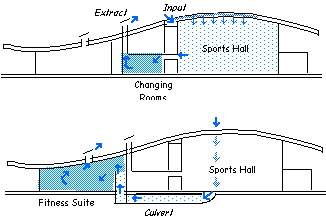
Many buildings remain less comfortable and healthy then they might
be and consume unnecessary energy for ventilation & cooling.
This module seeks to highlight the principal issues and sources
of guidance. Click here to see
the front page of the module reference guide. |
 |
Module
7:
Renewable Energy Technologies
Increasingly part of the design pallet and with increasing support
from government, renewables are still new to the vast majority of
designers and clients. This module will give guidance on how to
make best use of the available opportunities and how to go about
designing and specifying appropriate systems. Click here
to see the front page of the module reference guide. |
 |
Module
8:
Sustainability Drivers
This module provides a review of the principle milestones which
have brought about the shift in attitudes towards sustainable design
of the built environment. Click here
to see the front page of the module reference guide. |
 |
Module
9:
Construction Processes, Site Issues and Handover
This module provides best practice guidance on tender evaluation,
site practice, management and handover. Click here
to see the front page of the module reference guide. |
 |
Module
10:
Low Impact Construction
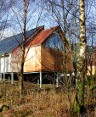
This module looks at recent innovative initiatives to design using
very low impact materials such as straw, earth, hemp and timber.
Click here to see the front
page of the module reference guide.
|
 |
Module
11:
Electrical Installations
This module is intended to help designers to develop strategies
for low impact electrical services design and to implement them
effectively. Click here to
see the front page of the module reference guide.
|
 |
Module
12:
Post Occupancy Evaluation
A thorough and concise review of methods of obtaining feedback from
buildings in use and the history of development of the techniques
with a series of case studies largely taken from the PROBE studies.
Click here to see the front
page of the module reference guide.
|
 |
Module
13: Cost
Issues
This module undertakes a comprehensive review of the cost implications
of 'green' building.
|
 |
Module
14: Benchmarking
Performance
How, with the use of expert guidance, designed processes, tools
and formal & informal environmental management processes,
to get efficient, healthy, responsible buildings.
|
 |
Module
15: Urban
Ecology
This module considers the sustainable design of the built environment
of our cities and countryside.
|
Module reference guides can be ordered separately. To make an order
please download the order
form and send it with a cheque made payable to "Gaia Research"
to:
Gaia Research, The Monastery, Hart Street lane, Edinburgh EH1 3RG.
For
more information contact Sandy Halliday on 0131 558 7227 or e-mail gaiasandy@aol.com.


![[image]](../../../images/gaia_plan_logo1_sml.gif)
